In Taolagnaro (Fort Dauphin) a 100-year ilmenite mining lease is not only threatening the well being of tens of thousands but as well their livelihood and our natural heritage. A RioTinto subsidiary QIT Minerals Madagascar (QMM) mine has breached its buffer zone on two lakes and is contaminating the water source of citizens surrounding the mine.
Following incidents of fish floating on the surface of the lake, reports about dirty water and cattle dying after drinking it, we had to investigate.
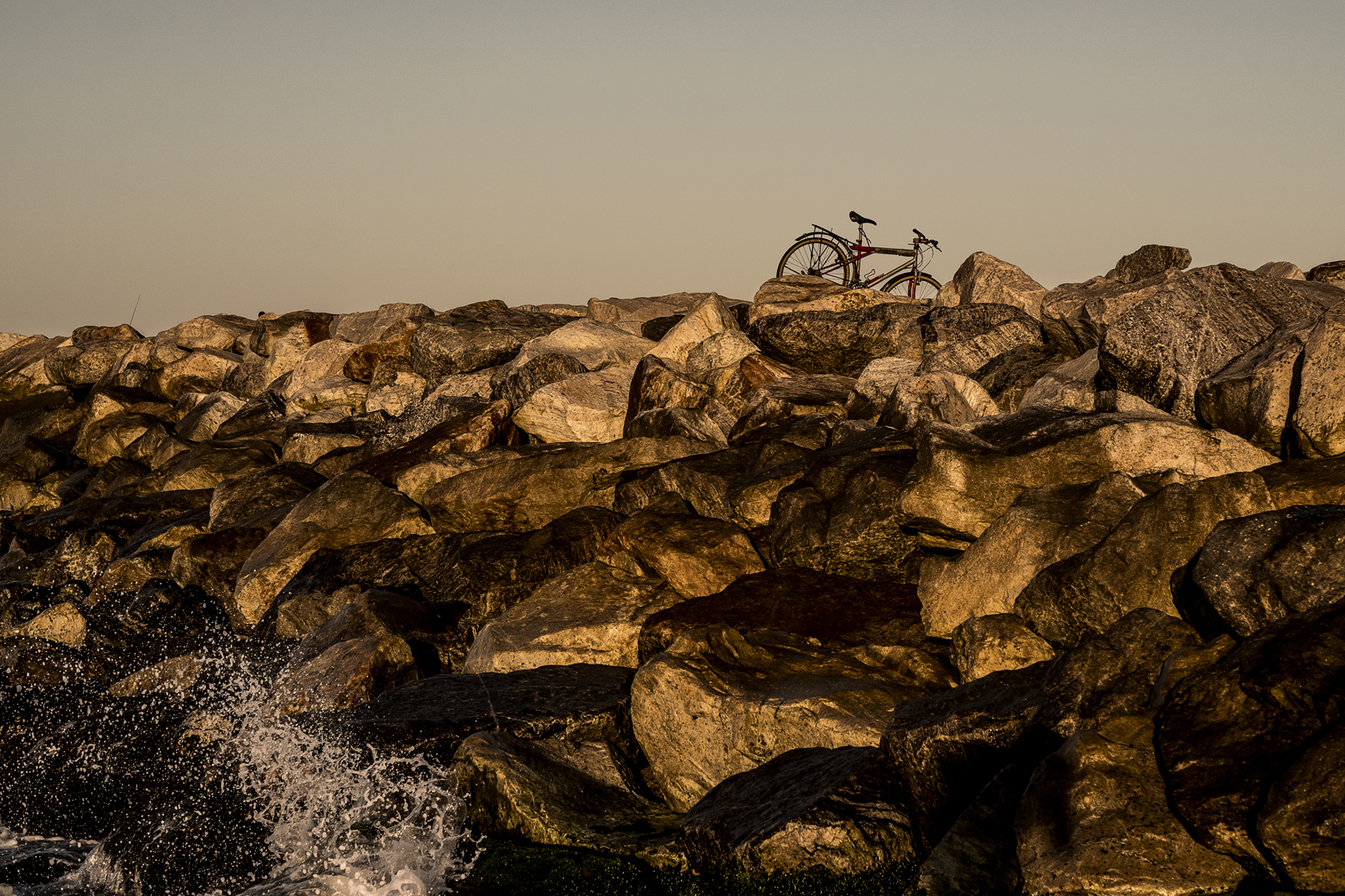
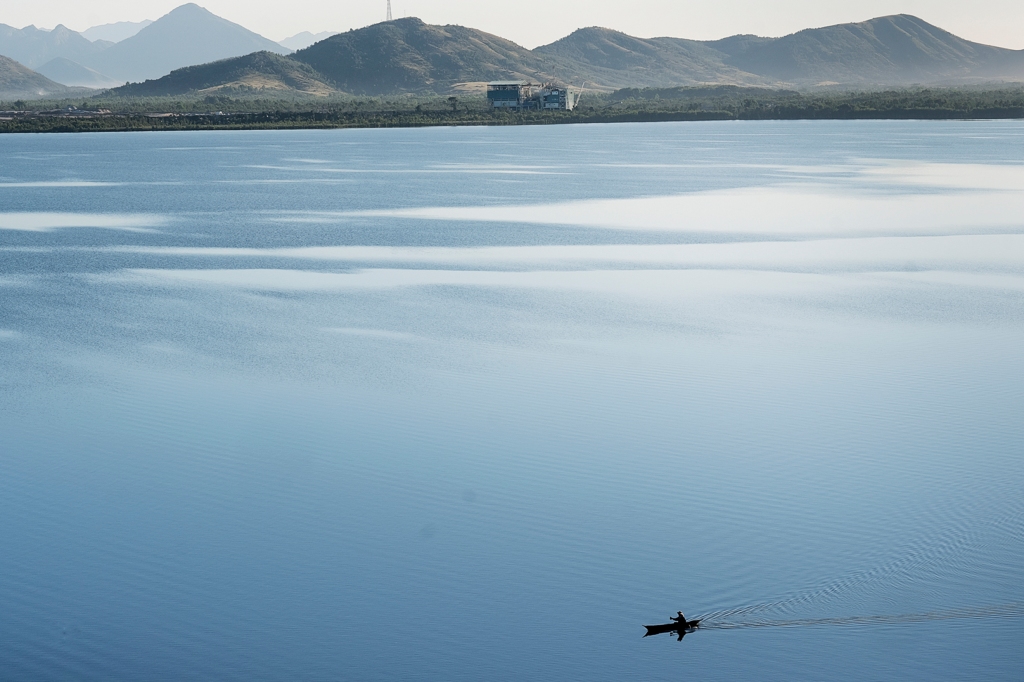
The RioTinto QMM operations began in 2005, the mine is licensed to extract from 6,000-hectares of unique littoral forest. Still in its first phase (Mandena), the mine is operating in a sensitive environment – a breathtaking maze of swamps, lagoons, rivers, three lakes (Ambavarano, Besaroy and Lanirano) and an embouchure to the Indian Ocean – with variable weather conditions. The most southern lake of this natural water system (Lanirano) is the drinking water source of Taolagnaro.
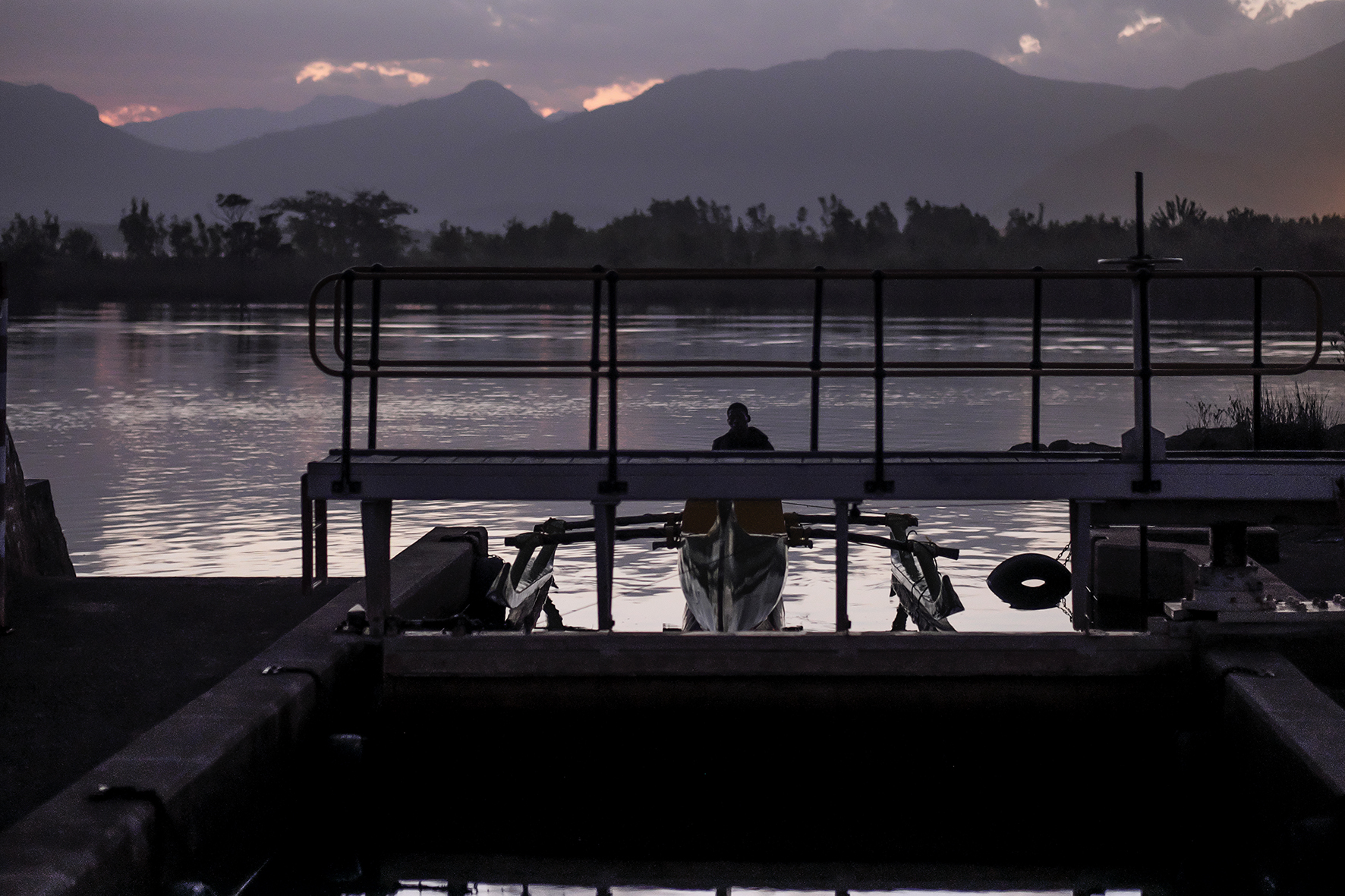
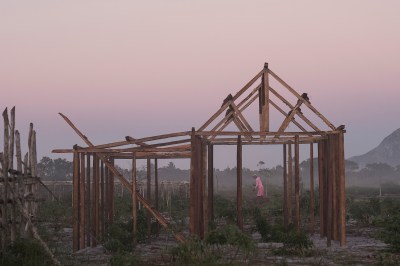
10-kilometers from Taolagnaro, a fishermen village – Andrakaraka – spreads opposite to RioTinto QMM operations between lake Besaroy and the ocean. When we arrived, a thick smog enveloped the rural morning as the villagers started stirring from their huts and houses. As the sun rose higher in the sky, so did the number of complaints about the mining operations, the villagers’ frustration was obvious.
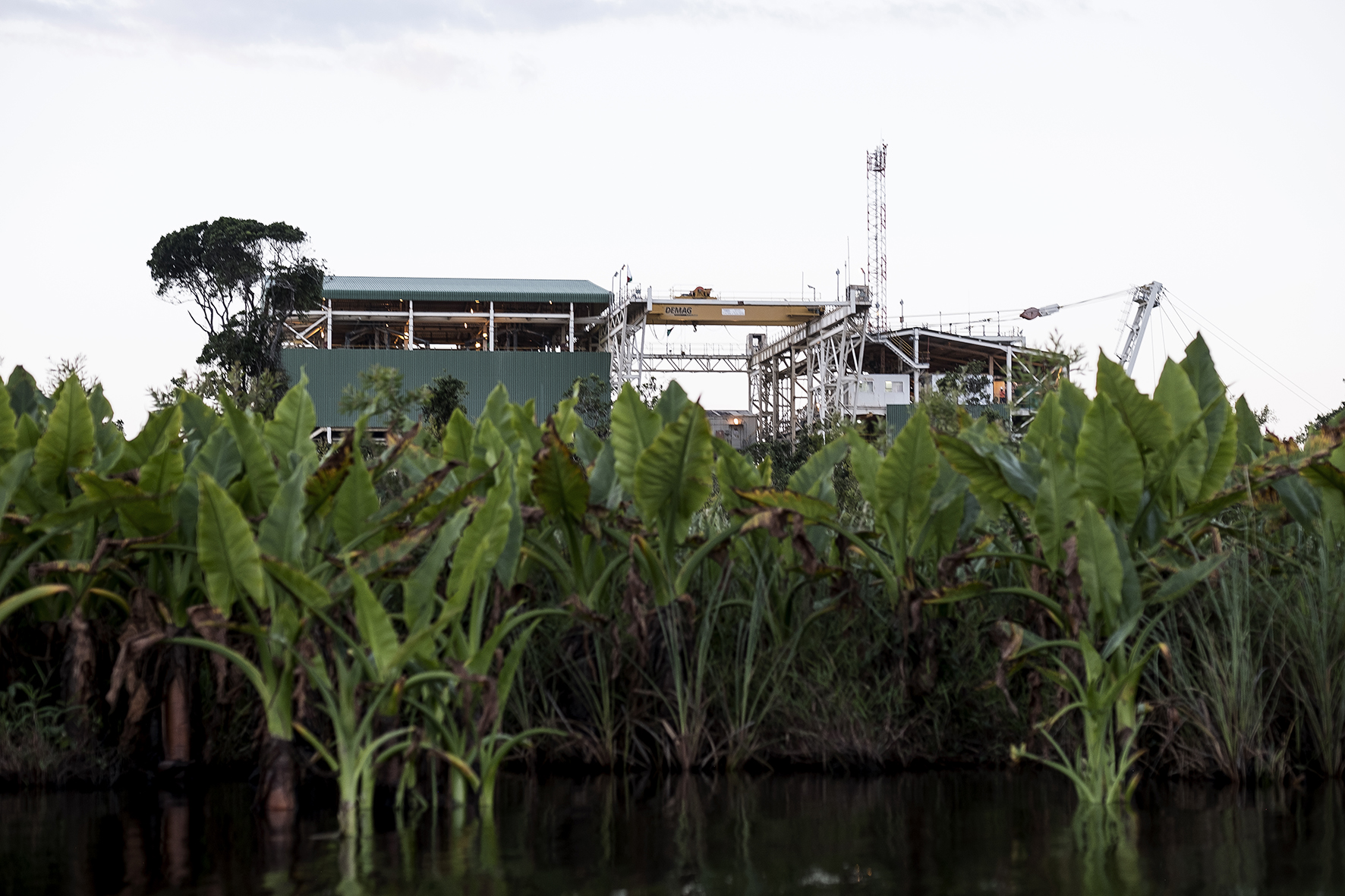
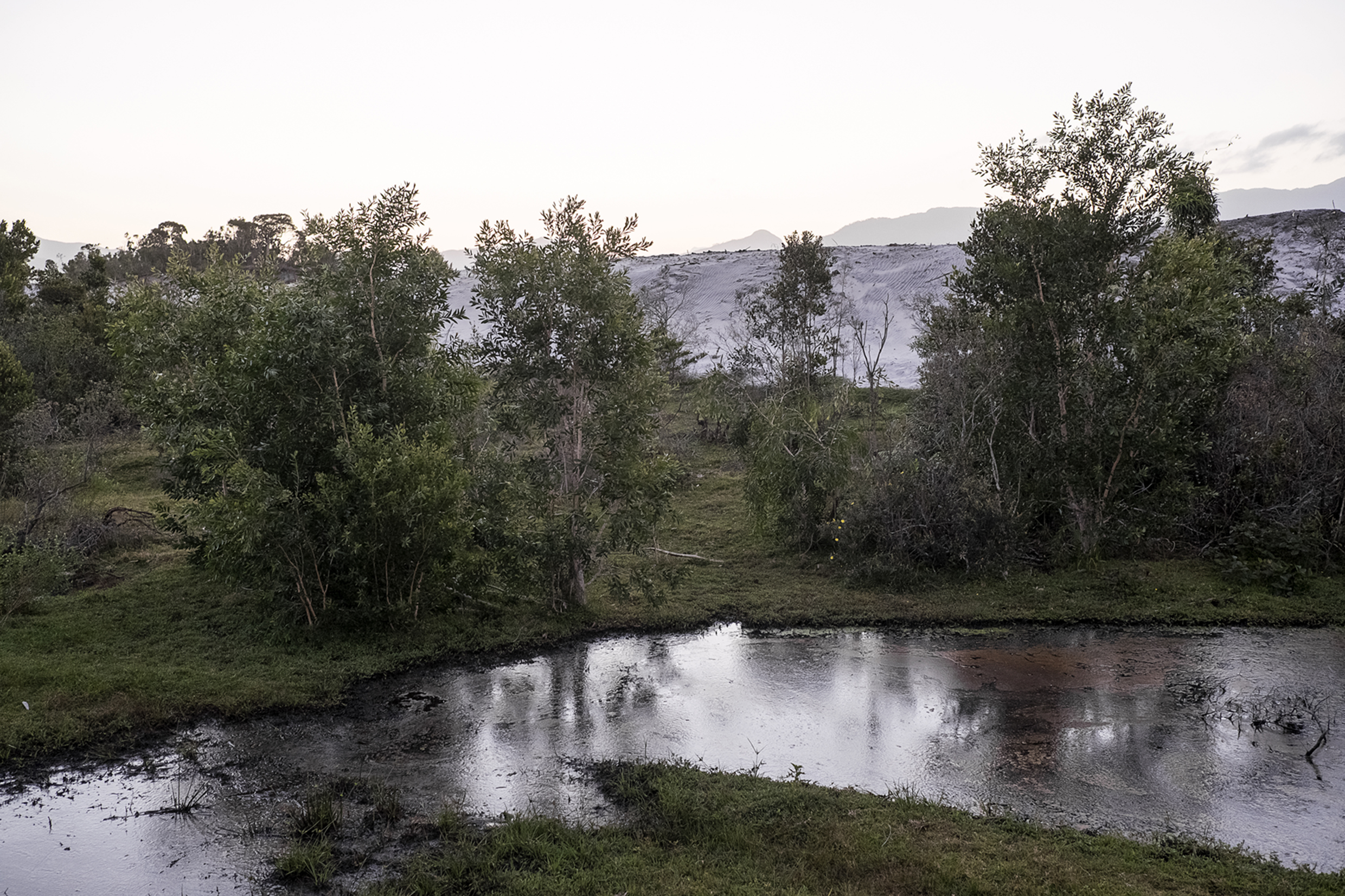
In order to extract the minerals, RioTinto QMM must clear the trees, flood the land and then dredge it. To control water flow, they constructed a weir (196-meters) across the embouchure, blocking the ocean water. Once flooded, mining ponds are created and a machine (60mx40m) pulled by a boat is dragged around the site to extract ilmenite, zircon and monazite. Mining operations in Madagascar are legally required to maintain an 80-meter undisturbed buffer zone from any natural water body (!) (1).
The weir which blocked the ocean and its bounties from the water system has had ramifications. Villagers recount how a few months after its construction, the aquatic plants living on the lakes’ bed died. Then, the water color started changing, the daily fish catch decreased and the species’ variety diminished from 40 species in 2005 to less than 9 species today as per Racharles, a 32 year old fisherman. In addition, it elevated the water level of the lakes flooding the rice fields on the canals stopping rice cultivation in the area.
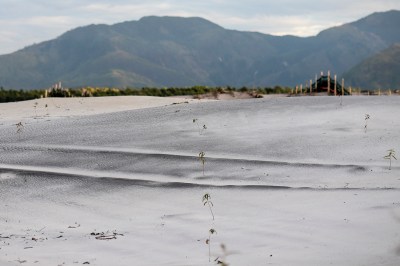
From the extracts, monazite is a reddish-brown phosphate mineral containing rare earth metals and thorium – a highly radioactive metal that could be used as a replacement for uranium in nuclear power generation. The extraction process concentrates the radionuclide content of the residue of ore (tailings) and should be disposed of 15-meters below the surface. However, RioTinto QMM piled the mine tailings to construct a berm 30-meters wide 4-meters high on top of the buffer zone (2).
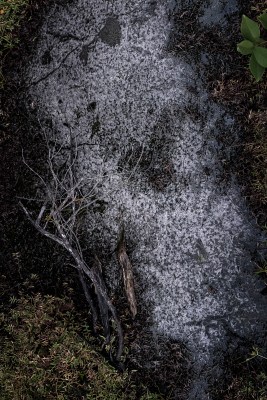
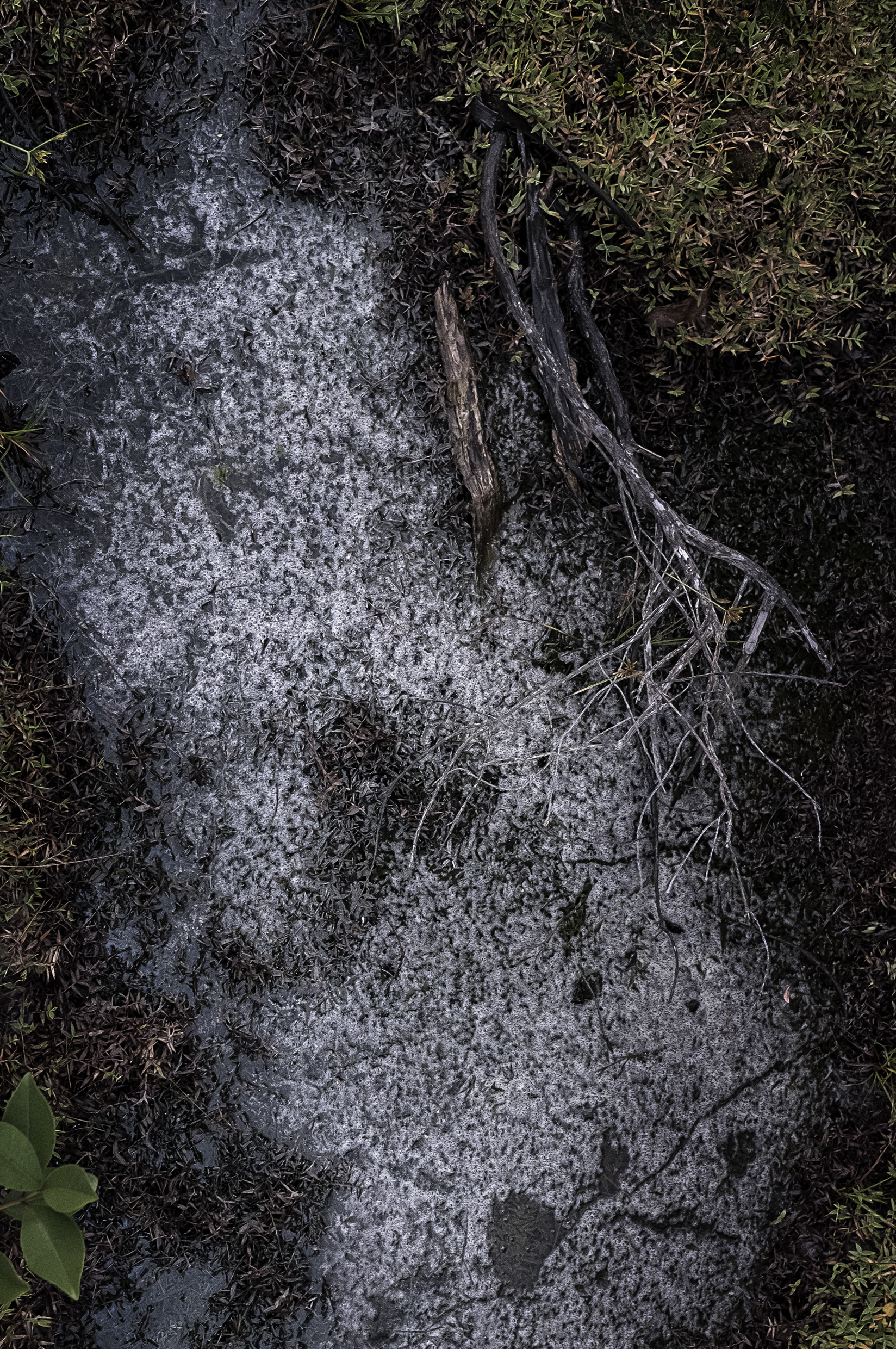
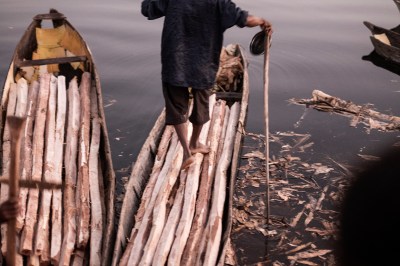
Villagers told us that dirty water from the mine is seeping into the lake. We decided to see for ourselves, so we rented a pirogue and headed to where the buffer zone is supposed to be on lake Besaroy and lake Ambavarano. Instead, a sandy wall stands not more than five meters from an ancestral burial place and 10 meters from the lake. Ponds of white water have formed in between and one was spilling into the lake. We collected water samples from the seepage and returned to the village.
Around Andrakaraka we spotted a few broken wells. Mr. Gistavy, a 30 year old shop owner and father of two, tells me they were constructed by RioTinto QMM back in 2012. These produced undrinkable murky water and thus were abandoned. Asked where he collects their drinking water from, he pointed out in the direction of the river (between Besaroy and Lanirano), there where he believes it is the cleanest water. We took a sample of his drinking water as well.
The decrease in fish catch has forced the younger generation of Andrakaraka and neighboring villages to look for more profitable alternatives, namely timber and charcoal production. The widely spread Kininy Bonaky trees (Melaleuca Quinquenervia aka Niaouli) are their only choice. Niaouli tree is an invasive species in Madagascar, it is native to Australia. When stressed, it may release as many as 20 million seeds at one time.
The aggressive growth of Niaouli conflicts with the growth of native plants such as the Mahampy (Lepironia Articulata). Mahampy is a reed highly valued in Madagascar for artisanal products because of its durability, suppleness and workability. The decimation of mahampy with the villagers around Mandena is an act referred to by one man as ‘le sabotage de QMM’’; he said ‘‘They [RioTinto QMM] dropped kininy bonaky seeds in silence, and told the people that when the kininy bonaky was big, no more mahampy!’’ (2)
As our time in Taolagnaro closed to end, we decided to verify another claim: RioTinto QMM had pledged to reforest the mined land with 25% of endemic species and 75% with eucalyptus and acacia. The planting has long started, but villagers are suspicious. ‘’They are hiding things from the public, if you pass on their road you see big trees on the sides, but you are not allowed to see what’s beyond. We saw : destruction! Only kininy (eucalyptus) is growing and it grows best in places where there was no mining. They [RioTinto QMM] are trying to hide it by adding top soil rich in chemicals which rain keeps exposing’’ says Rasona, a 29 year old charcoal producer.
Indeed, reforestation is taking place, but only Acacia and Eucalyptus. In Adrakaraka, a couple of households have RioTinto QMM commissioned nurseries with select endemic trees, but compared to the huge amounts of acacia and eucalyptus transported and planted by RioTinto QMM cars, they are a fraction. Furthermore, the agreement had disregarded the endemic plants that used to grow in the area, these have always been the source of medicine for locals, today a RioTinto QMM doctor visits the village once per week for a fee.
Behind the RioTinto QMM production plant, pipes silently discharge water into the young forest nearby and joins open canals by the road. We took a sample of that water as well and left the Anosy Region. All four water samples were sent to ICP-MS (Inductively-Coupled Plasma – Mass Spectrometry) Metals Lab in the United States (Utah) for analysis.
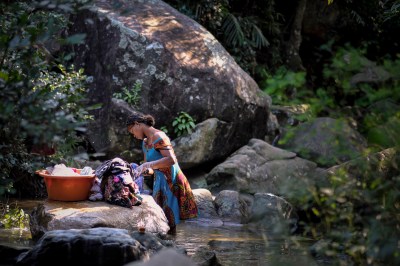
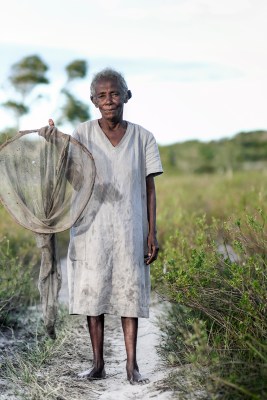
Rosaly, 90ans, a commencée sa journée à 5h du matin. Les poissons se font rares dans le lac. Après 2h de labeur, la pêche ne suffira même pas pour un petit déjeuné.
In addition to the four water samples taken downstream from the mine, the laboratory acquired five upstream water samples, each having been analyzed for 46 elements and isotopes. The results are alarming, harmful concentrations of aluminum, arsenic, iron, lead, manganese, thorium and uranium have been detected.
The average uranium concentration in downstream water samples was 0.049 mg / L – 63% higher than the WHO (World Health Organization) guideline of 0.03 mg / L and compared to 0.00014 mg / L upstream. While the water from the infiltrations to Lake Ambavarano showed a shocking shock 87 times more iron and 98 times more aluminum than the average recommended for aquatic life and the drinking water standards of EPA respectively (US Environmental Protection Agency). (4)
The results show a negative impact of the RioTinto QMM mine on regional water quality, exposure to high levels of uranium in drinking water over a long period of time can affect the kidneys and bones, which may lead to cancer. Whereas, it has been hypothesized that exposure to aluminum is a risk factor for the acceleration of the onset of Alzheimer’s disease in humans (5).
Access to clean water is a human right. For RioTinto QMM to know and fail to act is opposite to the image the multinational company prides itself of and is inconsistent with Rio Tinto’s sustainability commitments. For the people, this report evinces their life, health and environment is in the hands of those who wanted it all, while irresponsible destruction continues.
(!) révisé à 50 mètres par ONE (office national de l’environnent) a 2015
(1) Code Miniere – Chapitre II – DE LA PROTECTION DE L’ENVIRONNEMENT – Article 105
(2) ALT_UK_Emerman_Report_Buffer_Zone_Eng_2018
(3) Caroline Seagle – Journal of Peasant Studies, 2012
(4) Dr Steven. H Emerman, Malach Consulting – Impact on Regional Water Quality of the Rio Tinto QMM Ilmenite Mine, Southeastern Madagascar – November 2019
(5) WHO/SDE/WSH/03.04/53 – Alumium in Drinking Water – 2003
 Journal D'un Barbu